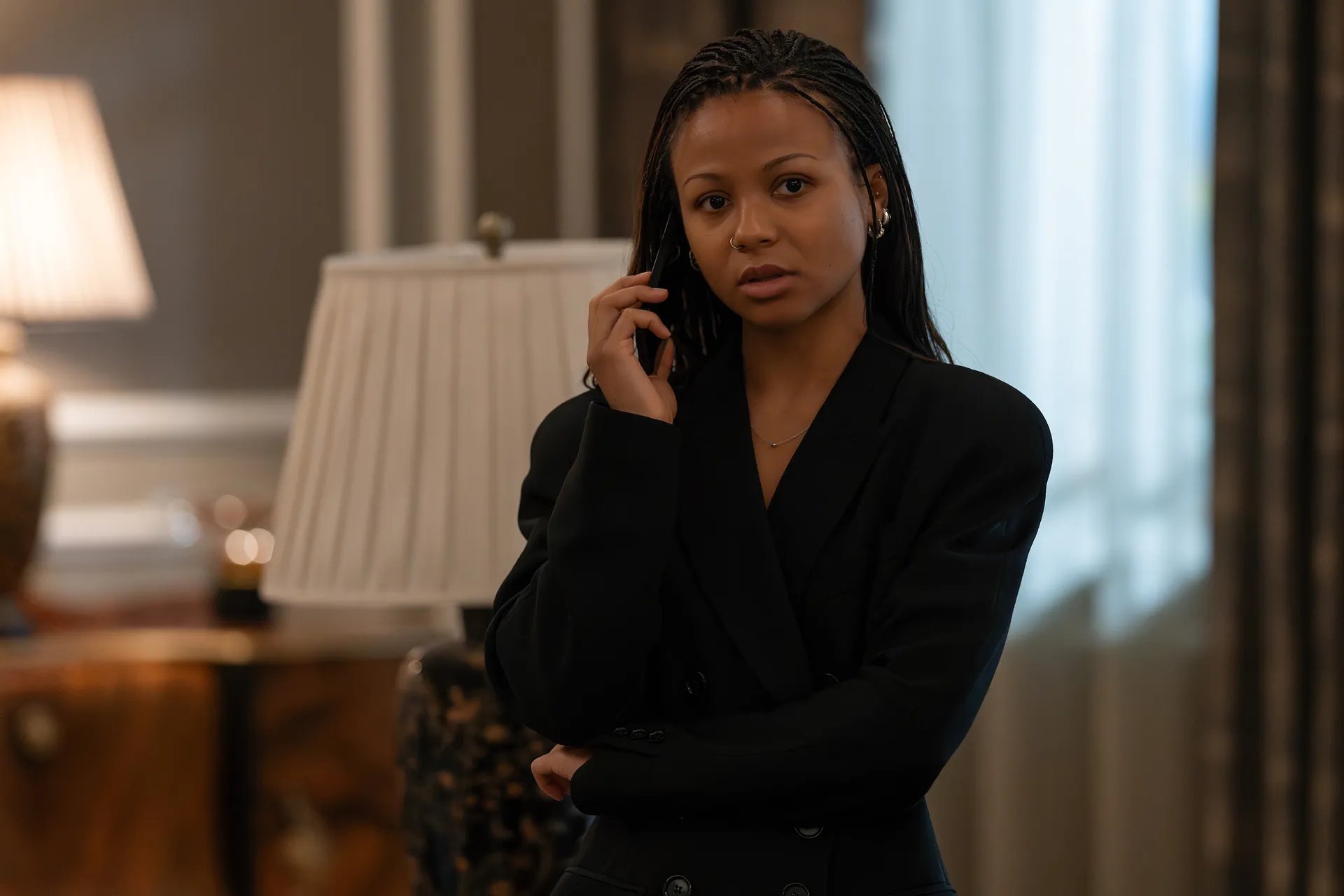
HBO’s Industry character Harper Stern has a lot going on. From insider trading to launching her own hedge fund, Harper’s journey through the world of investment banking has been a tumultuous one, to say the least.
As is the case for many Black women working in corporate (though Harper is truly on a journey all her own), her hair reflects the various stages of her career. From getting fired for lying about having a college degree (among other things) to having her own company, our favorite flawed character’s hair has elevated in step with her career advancements.
When we first meet Harper (Myha’la), her hair was styled in worn-in braids, a low-commitment style that’s dependable and their overgrown state signifies her uncompromising nature as she is so locked in to not only surviving but dominating the cut-throat white, male-dominated industry. She didn’t have the time or presumably the desire to spend extra time getting her hair done. Also, given her humble starter pay grade, she was less inclined to shell out the coin needed to keep up with her hair.
In Season 2, Harper shifts from grown-out braids to her natural hair, which is not disheveled but noticeably simple. With her hair pulled back and away from her face, viewers get a better look into the “bare” roots of Harper’s mentality and the focus required for her to not just excel at her job but also keep up with the web of lies from which her career spawned.
It’s never ‘just hair’
Conversely, when she’s hanging out with her friends or just chilling at home, she literally and metaphorically lets her hair down, and we get to see full-fro Harper in all her natural glory.
Fast forward to Season 4, and Harper is most likely in a higher tax bracket, and her super neat and fresh human hair knotless braids reflect as much.
None of this was a coincidence: All of Harper hair choices were deliberate renderings pondered on and executed by My’hala.
The power of intentionality
So, what did that mean for Harper’s hair, you may ask? “I was like, well obviously it’s gotta be the micro braids with the human hair,” Herrold said during an episode of The Run-Through with Vogue. “It’s gotta be the most expensive, probably the most high-maintenance… and the most elevated version of Harper.” According to Herrold, Season 4 Harper is in her “rich girl era.”
This transition, which to the untrained eye might seem like a superficial shift, is the lived reality of many Black women whose hair mirrors their journey through the professional sector. To see even the more nuanced subtitles of the character of Harper being handled with such care is a testament to the power of collaborative settings in film and TV. Because after all, it’s never just hair.
